The Hearth Stays has borrowed a sliver of land along the Changspa stream, nestled in the valley of Horze, a locality on the outskirts of Leh town to bring into place a habitable commune for travellers to stay and interact. It will serve as a home base while they travel around exploring the rugged landscape of Ladakh. In the end of it all we will return the land as we found it.
The campus attempts to demonstrate an glocal tourism model with integrated traditional wisdom and sustainable technologies.
Design brief
Built in tandem with site, climate and local feasibility
Use of scrap material
Innovating outside-the-box
Low embodied energy
100 sqft construction
Easy maintenance
Comfortable to stay in and Anthropometrically designed
The brief is to design an accommodation pod that can be used by travelers. The structure must be spatially and climatically comfortable for two persons to live in. It should house beds, storage cabinets and a small desk and can serve as a temporary home.
The design process will depend on the Facilitator heading the design team. The commonality would be that the design will have to develop from the selected scrap.

Space Strategy
Each unit can occupy roughly 100 sq.ft. of land. The structural design can be experimental in nature but the space needs to be maintenance friendly to facilitate regular housekeeping. The interiors of the room must be comfortable with sightlines relating to the landscape around.
Climate
Leh, being situated in a high altitude, arid region, the temperatures go well below zero even during tourist season. Thermal comfort of the interior spaces is crucial and needs to be achieved with minimal energy use.
A lower spatial volume would help save fuel and heating costs. Operable windows and cross-ventilation would help ease the need for Air-conditioning. We encourage the exploration of passive heating and cooling methods to achieve indoor thermal comfort.
Construction
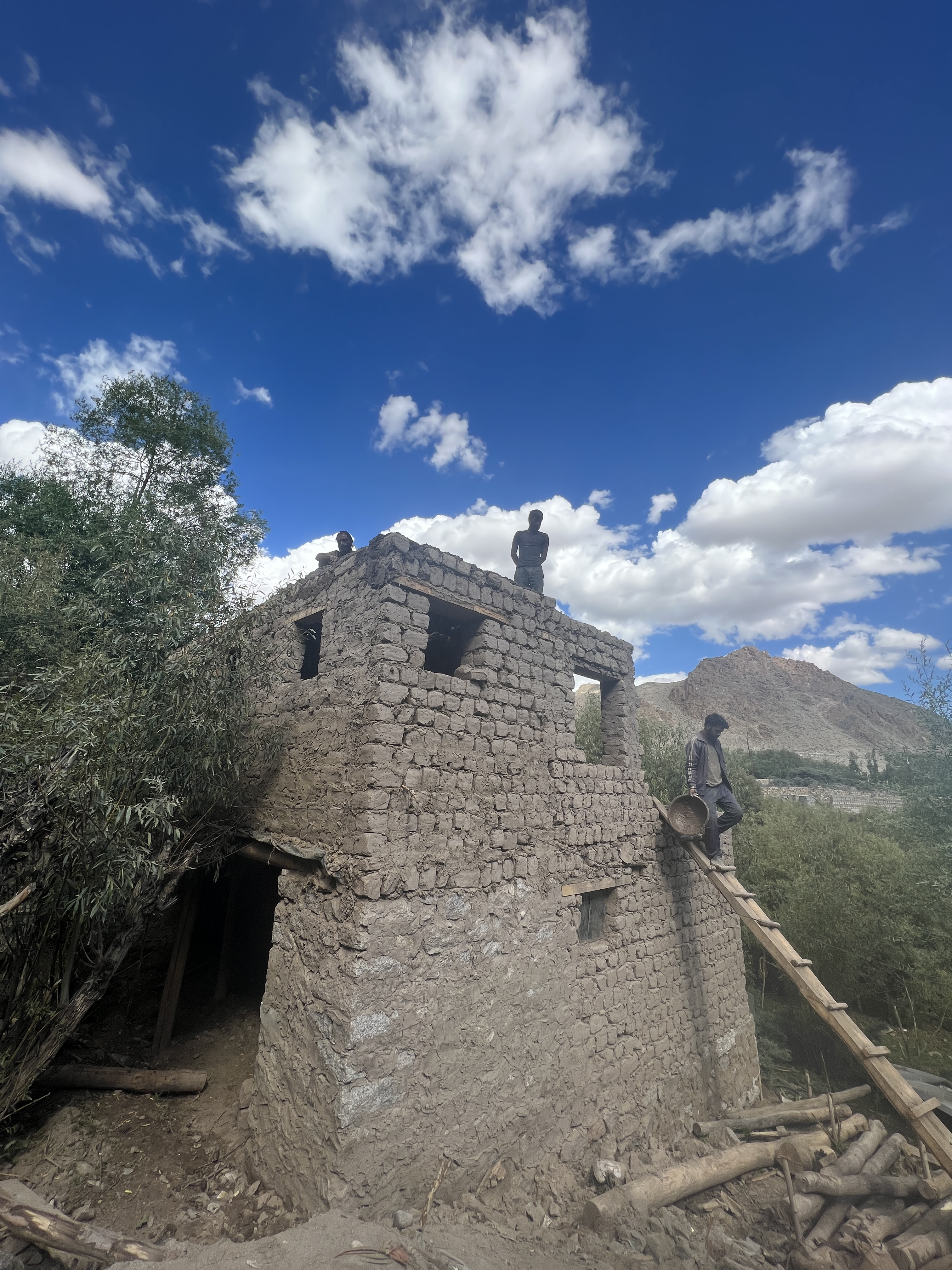
The idea is to conceive a new form of architecture that fuses the traditional earth technologies prevalent in the region. A unique aesthetic can be derived from the available materials.
A fund of INR 50,000/- will be available to each facilitator for purchasing various building materials.
Material palette
The construction of the unit demands a combination of skills – masonry, carpentry, fabrication and assembly. Local team of masons, carpenters and welders will be available to help execute the construction.
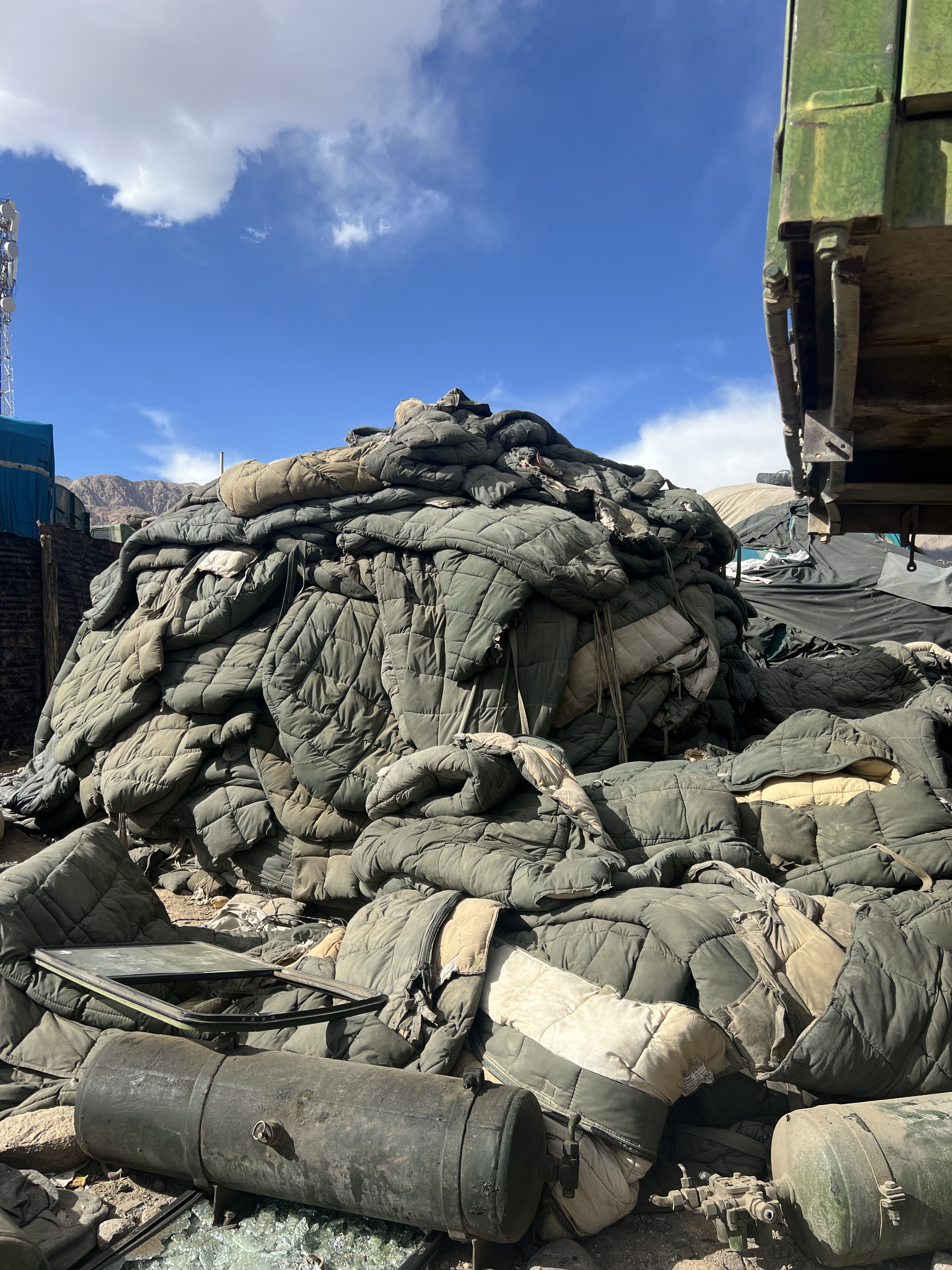
An initial survey conducted of scrapyards in Leh revealed an assortment of usable discards.
A list of materials available are described below:
Stone – The river stones present on the site can be dressed and used in dry rubble construction and with mud mortar.
Timber – Varied sizes of salvaged timber, discarded crates and doors and windows are available in the scrapyards. are available to use.
Earth – Being next to a river, the soil is sandy-silty. Soil with higher clay content can be sourced for plastering.
Metal Waste – Metal scrap is abundant and mostly consists of vehicular discard.
Discarded Tyres – Varied sizes of tyres are available in plenty.
Glass – Tempered glass found from discarded vehicles is the primary source of glass for us.
Construction Debris – Old adobe, doors and windows of varied sizes may be found.
Insulation Material – Foam sheets, discarded sleeping bags of high grade and lightweight mats capable of sub-zero temperature have also been found.
Possibilities of discovering usable material are endless. If required, new material can be sourced and used judiciously.
 The Hearth Builds